
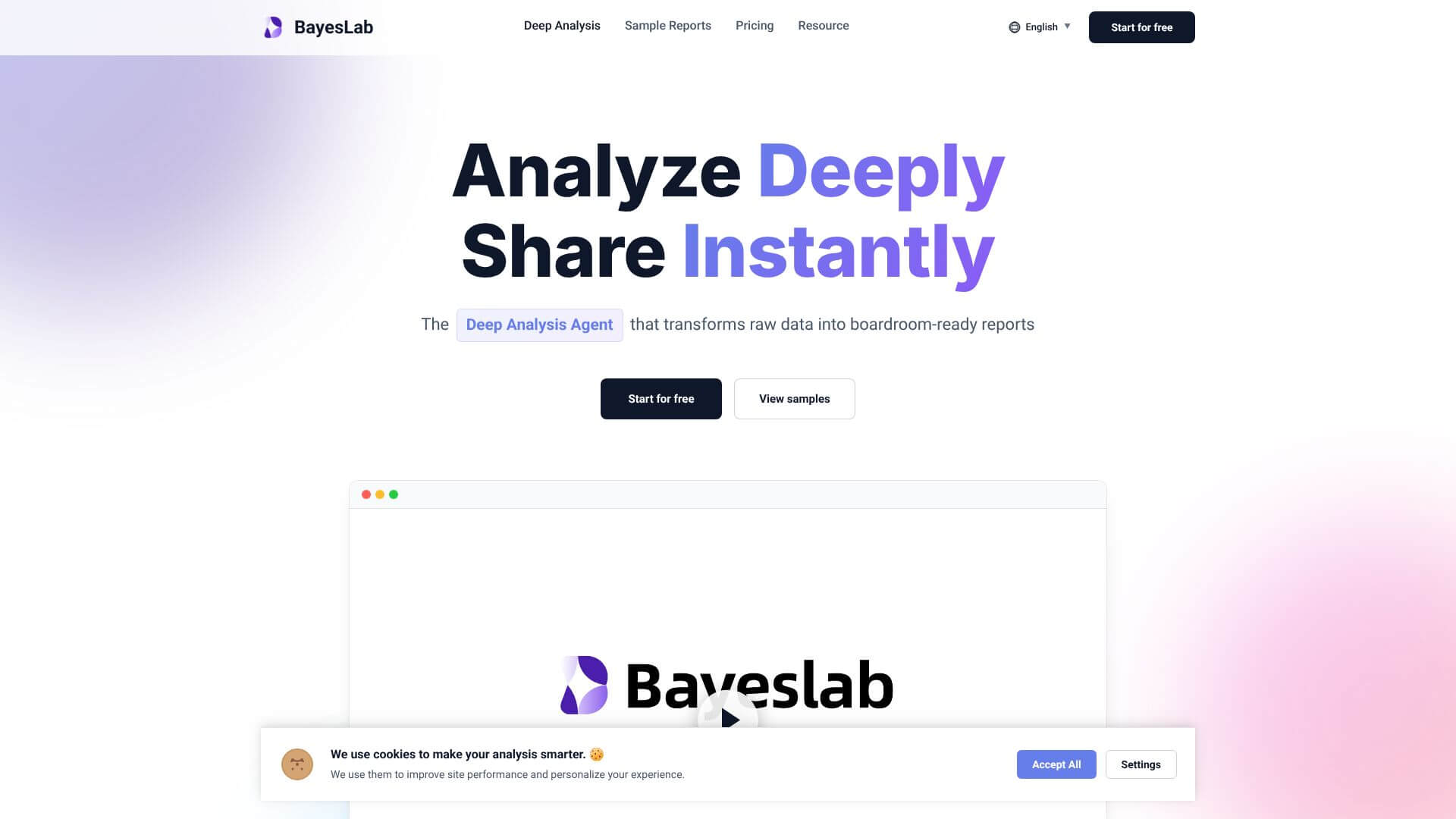
BayesLab is an AI Business tool. Automates data analysis from raw data to reports, for anyone. Key features include Automated Data Cleaning and Quality Assessment, Intelligent Exploratory Data Analysis and Pattern Discovery, and Advanced Root Cause Analysis and Diagnostic Reasoning. Best for data scientists and analysts, business consultants and financial advisors and analysts.
About BayesLab
BayesLab is an AI data analysis platform that automates the full data workflow from raw input through cleaned data, exploration, modeling, root-cause analysis, and presentation-ready reports. The platform targets non-technical business users who need data insights but lack coding skills, turning natural-language questions into actionable analysis.
The core features that matter
- Automated data cleaning and quality assessment handling missing values, anomaly detection, and duplicate removal automatically, saving the substantial preparation time that typically gates data analysis
- Intelligent exploratory data analysis and pattern discovery exploring data to surface trends, patterns, and outliers that human analysts might miss, breaking down findings across relevant factors
- Advanced root cause analysis and diagnostic reasoning explaining why business metrics changed, identifying whether shifts come from specific segments, regions, or correlated product changes
- Presentation-ready report generation with integrated visualizations and narrative producing professional reports with charts, summaries, and recommendations that connect findings to business context
- Scheduled automation and recurring analysis running analyses on schedules with updated data, supporting regular reporting workflows without manual re-execution
- Multi-dataset integration and flexible data connectivity connecting to multiple data sources for unified analysis across systems
How it stands out
The AI data analysis space has competitors including Julius.ai, Hex Magic, and several enterprise BI platforms with AI features. BayesLab's specific position emphasizes end-to-end automation from raw data through report generation, targeting users who want full analysis output rather than just chat-with-your-data interactions.
The honest qualifier: AI data analysis works well for common business questions with clear data patterns and less well for nuanced questions requiring domain expertise to interpret. BayesLab can identify that a metric changed and surface correlated factors, but the business interpretation of why those changes matter still requires human judgment. The automated reports save substantial time but should be reviewed before being shared with executives. For business teams without dedicated data analysts, BayesLab meaningfully accelerates insight generation. For organizations with established analytical teams, the platform complements rather than replaces existing expertise.
Key Features
Automated Data Cleaning and Quality Assessment.
Intelligent Exploratory Data Analysis and Pattern Discovery.
Advanced Root Cause Analysis and Diagnostic Reasoning.
Presentation-Ready Report Generation with Integrated Visualizations and Narrative.
Scheduled Automation and Recurring Analysis.
Multi-Dataset Integration and Flexible Data Connectivity.
Frequently Asked Questions
BayesLab is an AI-powered platform. It automates the entire data analysis process. It uses specialized AI coworkers. They handle tasks from cleaning data to generating reports.
You upload your data. Then, you ask business questions in everyday language. BayesLab's AI then uses specialized tools. They profile data, find insights, and interpret results. It even figures out data types and handles missing information for you.
BayesLab has six main features. It cleans data automatically. It explores data to find patterns. It figures out why things change. It creates professional reports with visuals and text. It can run analyses on a schedule. And it connects to many different data sources.
BayesLab saves a lot of time. It lets more people do complex analysis. Its automated processes are consistent. And it helps tell a complete data story. However, it can take 15-20 minutes to run analyses. Advanced users might miss having more control. Its quality depends on the AI models. Data privacy needs attention. And power users might find a learning curve with its simplified interface.