BookGraph is a Misc AI tool. Visualize your books as an interactive knowledge graph, revealing hidden intellectual connections. Key features include Semantic Analysis, Interactive Graph Visualization, and Connection Discovery. Best for teachers, writers and content creators.
About BookGraph
Key Features
Semantic Analysis.
Interactive Graph Visualization.
Connection Discovery.
Customizable Filtering and Exploration.
Insights into Personal Reading Patterns.
Export Functionality.
Frequently Asked Questions
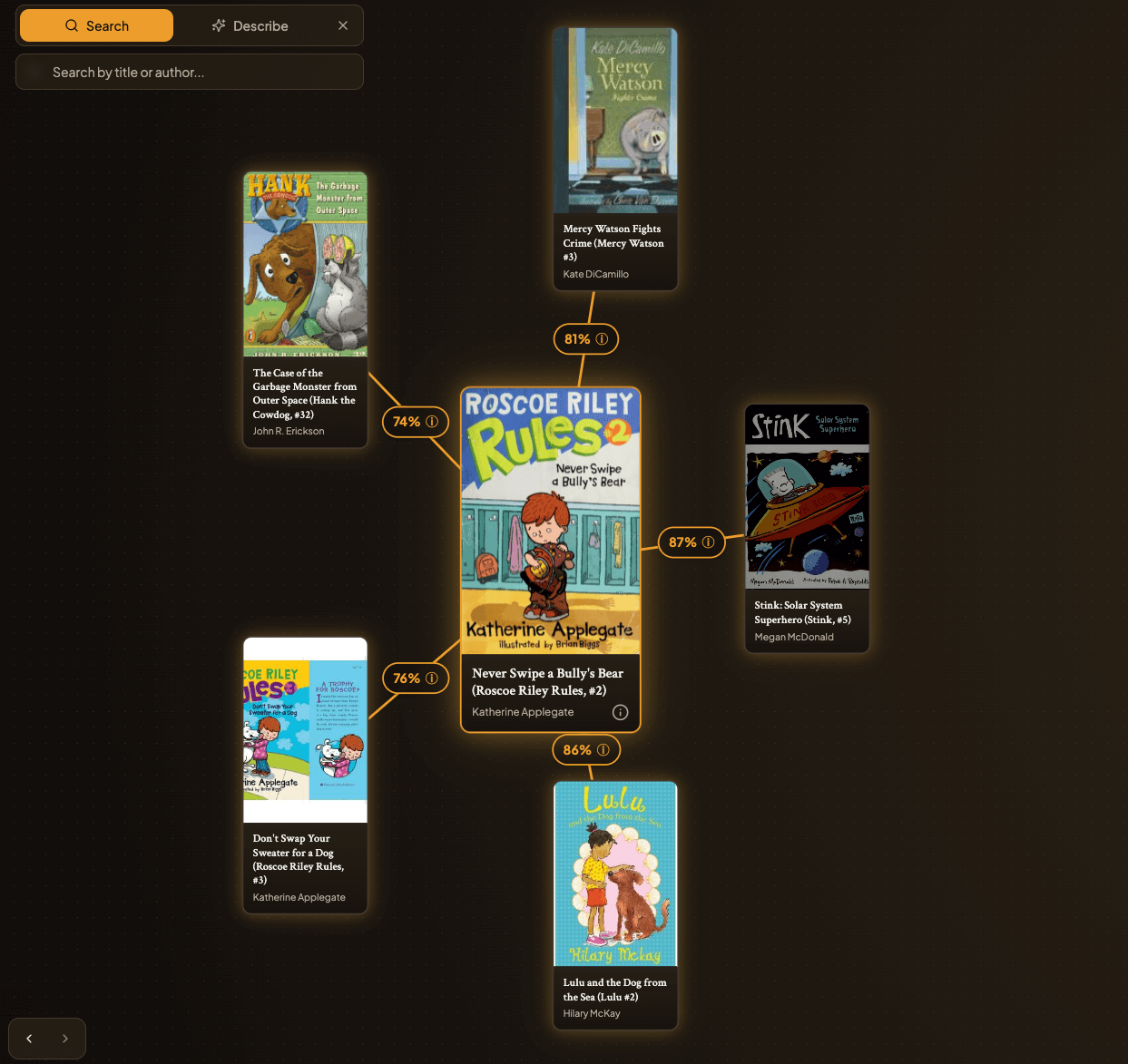
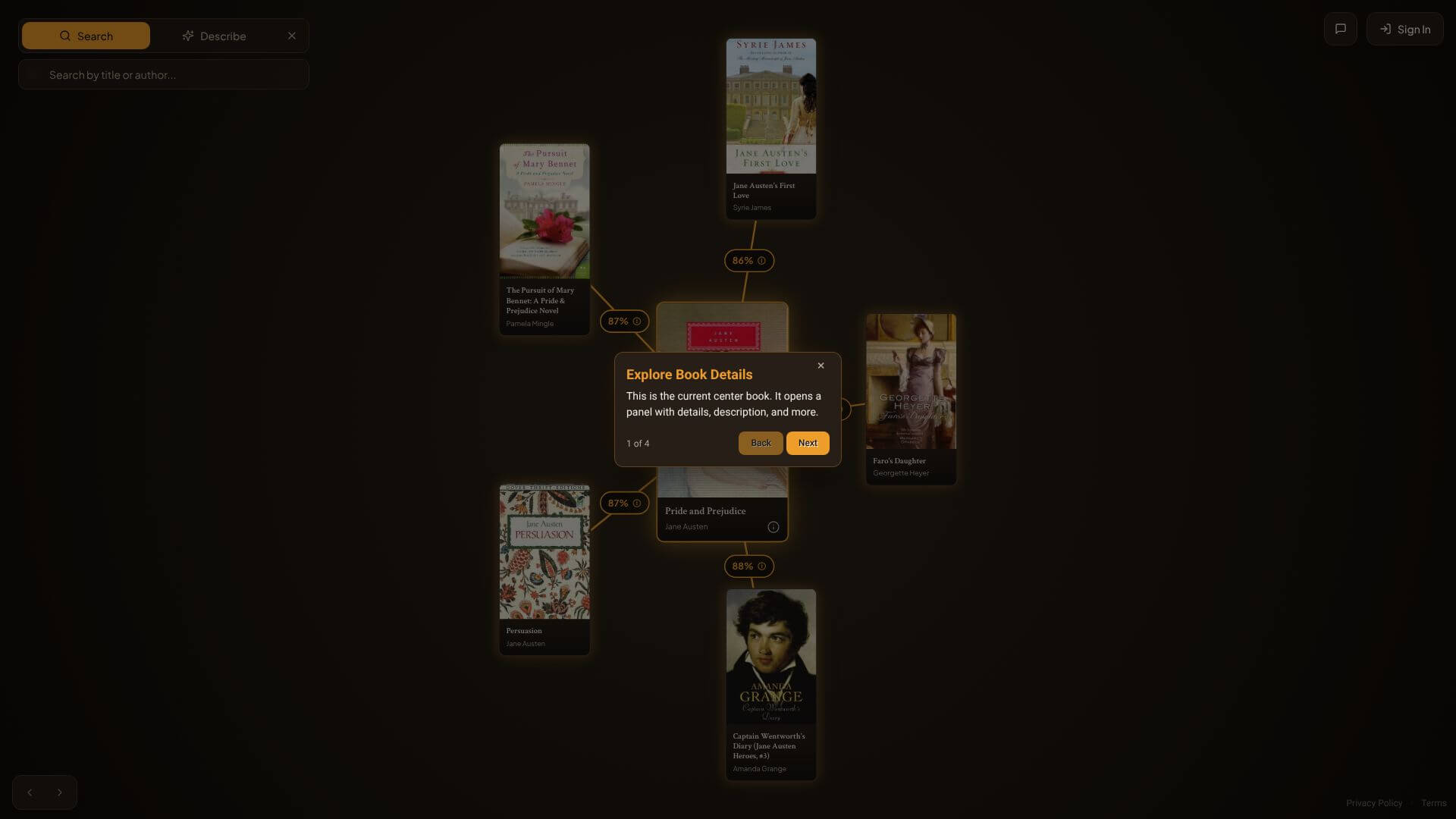
BookGraph is a web-based app that turns your book collection into an interactive network. It uses special analysis to find hidden connections between your books, not just catalog them. It analyzes subjects, descriptions, and keywords. Each book becomes a dot, and similarities connect them. This changes reading from a straight line to an exploration.
BookGraph helps you see how your reading shapes your thinking. Other apps just track books. BookGraph looks for patterns in your knowledge. You upload your books, and it uses TextRank analysis to show how ideas and themes flow through your library. You then see these connections as an interactive graph.
BookGraph has six main features. First, it uses semantic analysis to find relationships between books by looking at details like subjects and keywords. Second, it shows your library as an interactive diagram, grouping books by ideas, not just genre. Third, it reveals unexpected links between different books. Fourth, you can filter and explore your knowledge network. Fifth, it gives you insights into your reading habits, showing your unique themes and concepts. Sixth, you can export your data and eventually import Goodreads libraries.
BookGraph is different from Goodreads and The StoryGraph. Goodreads is about social connections and reviews. The StoryGraph suggests books based on your mood and preferences. BookGraph, however, focuses on visualizing the intellectual connections within your own library through semantic analysis. It doesn't recommend books; instead, it shows you the links already present in your collection. It’s about understanding your own intellectual patterns, not algorithmic suggestions.